How Often Should You Pressure Wash Your House on the Gulf Coast?
Salt air and humidity mean Gulf Coast exteriors need cleaning more often than inland homes. A realistic schedule by surface — including the pool cage and lanai screens most homeowners forget — and why waterfront homes run the clock fastest.
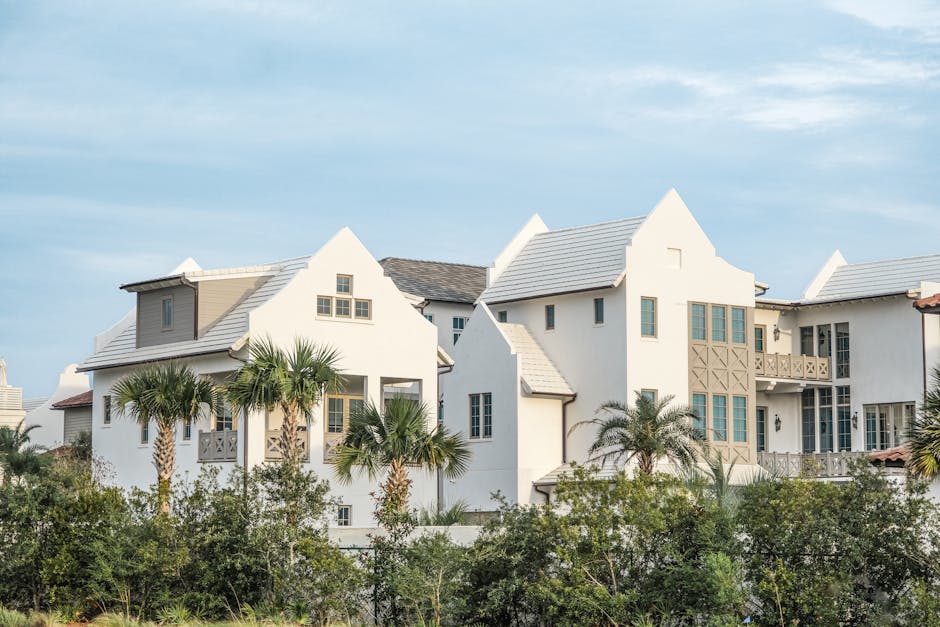
On the Southwest Florida coast, plan on washing the house every 12–18 months, the roof every 18–24 months (sooner if it streaks), the driveway once or twice a year, and pool cages and lanai screens 1–2 times a year. Waterfront and heavily shaded homes run on the shorter end because salt film and algae build up faster.
There’s no single right answer, but the coast tightens every interval. The same house that could go two years between washes in a dry inland climate needs attention yearly here, because three things — humidity, salt, and shade — all speed up organic growth. The trick is to clean on a schedule before the staining sets in, not after the house obviously looks dirty (by then it takes more work to remove).
By surface
| Siding & stucco | Every 12 – 18 months |
| Roof (soft wash) | Every 18 – 24 months |
| Driveway & concrete | 1 – 2 times a year |
| Pool cage / lanai screen | 1 – 2 times a year |
| Fencing & walkways | Yearly |
What shortens the interval
- Proximity to salt water. Waterfront and beach-block homes get a salt film that holds moisture and feeds growth — rinse more often.
- Shade. North-facing walls and anything under oaks or palms stays damp longest and greens up first.
- Pollen season. Spring oak pollen coats screens and stucco; a wash afterward resets it — and the removable panels are the half of that you can do yourself in an afternoon.
- Storm season. The Atlantic hurricane season runs June 1 to November 30, peaking around September 10 per NOAA — six months that drive salt, debris, and organic matter onto every surface.
None of this is unique to your house. University of Florida’s extension service catalogues how readily algae colonizes surfaces in Florida’s climate; the coast simply runs the clock faster than the rest of the state.
We map all of this month by month in the Coastal Exterior Calendar — when each pressure (salt, pollen, algae, storms) hits hardest and what to do about it.
Screen enclosures, pool cages, and lanais
This is the surface Gulf Coast homeowners ask about most and schedule least, so it deserves more than a line in the table. A pool cage is an aluminum frame carrying fiberglass or phosphor-bronze mesh, and the two parts fail on different clocks. The mesh collects pollen, dust, and the fine organic film that turns into black mildew wherever it stays shaded and damp — typically the north and east panels and the lower two feet above the deck, where splash-out keeps it wet. The frame collects salt: within a mile or so of open water, the white powdery bloom you see at the fastener heads and screw channels is corrosion starting, and rinsing it off is cheap maintenance while replacing a corroded channel is not.
A workable rhythm for Southwest Florida:
| Mesh panels (soft wash) | 1 – 2 times a year |
| Frame rinse, waterfront homes | Quarterly |
| Kick plate & lower panels | Twice a year |
| Screened lanai floor / pool deck | 1 – 2 times a year |
| After a named storm | As soon as it is safe |
Two cautions that matter more here than anywhere else on the house. First, pressure is the enemy of screen. Mesh is held in its channel by a rubber spline, and a concentrated jet will blow the spline out of the track or tear the panel — a repair that costs more than the wash did. The job is a low-pressure application of cleaner, dwell time, and a rinse, not a blast. Second, do not let the mildew overwinter. Once the film is established in the weave, it holds moisture against itself and comes back faster each season. EPA’s household mold guidance makes the same point in blunter terms: act quickly, because mold damages what it grows on and the longer it grows the more damage it causes. Screen is not drywall, but the principle — fix it early, and fix the moisture, not just the stain — carries over exactly.
Four signs your interval is too long
Rather than counting months, most people can read the house. Any one of these means the clock has already run out:
- The north wall is a different color than the south wall. That is not sun-fading — it is organic growth on the elevation that stays damp longest.
- A wet finger drags a clean line through the stucco. If the film lifts that easily it is biological and still shallow; wait another season and it sets into the texture.
- The roof has started to streak. Streaking means algae is established, not arriving.
- The pool cage looks grey from inside but fine from outside. You are seeing the shaded face of the mesh, which always goes first.
The honest baseline
If you do nothing else, put a whole-home soft wash on the calendar once a year, in fall as the humidity breaks, and rinse salt off waterfront elevations between times. Homeowners who want it handled on a set cycle often set up an annual visit with a local crew — the soft-wash team we recommend around Naples keeps many waterfront homes on exactly that rhythm so the salt and mildew never get ahead of them.
Frequently asked
How often should I pressure wash my house in Florida?
How often should a pool cage be cleaned?
Is it bad to wash your house too often?
How do you clean a pool cage without damaging the screen?
How often should a waterfront home be rinsed?
What is the best time of year to pressure wash a Florida house?
More Climate Care
 Climate Care
Pollen Season Pressure Washing in Naples: A Tile-Roof and HOA Problem, Not Just a Yellow Film
Naples runs the same late-winter oak drop as the rest of Southwest Florida, but two things make the pollen wash a differ…
Read Climate Care
Pine Pollen Season in Pensacola: Why the Panhandle’s Yellow Spring Is Not an Oak Problem
Every spring guide written for Florida assumes an oak canopy. Pensacola sits in longleaf and slash pine country, and its…
Read