How to Clean Roof Shingles on the Gulf Coast: A Checklist Before You Touch the Roof
Almost every roof-cleaning page starts with the stain. On a shingle roof the more useful question is whether the surface can take a cleaning at all — an asphalt shingle is a manufactured sandwich of asphalt and mineral granules, and the granules are the part that force takes off. This is a gate-by-gate checklist for a Gulf Coast roof, in the order the decisions actually come up.
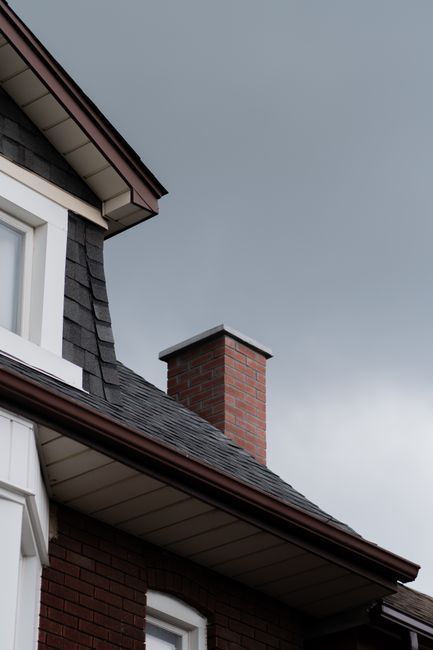
Clean asphalt shingles at low pressure and by chemistry, never by force. A pressure washer displaces the mineral granules that shield the shingle from ultraviolet light, and the largest US shingle manufacturer says flatly that a pressure washer is “not recommended” on shingles because it can “displace granules ... and potentially void any manufacturer warranties.” Use a garden-hose-pressure soft wash, let the solution kill the growth, rinse top-down — and skip the wash altogether if the granules are already gone, because cleaning restores appearance, not the roof’s remaining life.
Search how to clean roof shingles and you will find a hundred methods, almost all of them written about the stain — the black streaks, the green patch, the grey film — and very little about the thing you are about to pour water onto. That order is backwards. An asphalt shingle is a manufactured product with a finite amount of armour built into it, and the wrong cleaning method spends that armour. This checklist walks the decisions in the order they matter, from what a shingle is to who should be standing on it.
First, what an asphalt shingle actually is
A standard asphalt shingle is a sandwich: a fiberglass mat core, coated in asphalt, surfaced with mineral granules pressed into the top face. The mat gives it strength, the asphalt makes it waterproof, and the granules — the rough, gravelly surface you feel — are the sacrificial layer that takes the sun so the asphalt beneath it does not have to. Ultraviolet light is what destroys asphalt; the granules are parked on top precisely to absorb that punishment instead.
That single fact reframes the whole job. A shingle does not age because it gets dirty. It ages as granules shed, a little at a time, until the asphalt underneath is bare and starts to dry, crack and fail. So “how do I clean this?” is really “how do I clean it without spending the roof’s remaining life?” — and the methods that go wrong all go wrong the same way, by taking granules off faster than the weather would.
Gate 1 — Is the growth even a cleaning problem?
Before choosing a method, be sure what you are looking at, because the same dark roof on this coast can be four different organisms with four different answers. A dark streak running down the slope is an alga, and it is cosmetic; the green cushion in the laps under the oak branch is moss, and it is not. We sort the four common exterior stains in the mold-versus-mildew key, the organism that causes the vertical streaking in the black-streak explainer, and the identification problem in the roof-growth field guide. The gates below assume the growth needs addressing at all; if it does not, the safest roof cleaning is the one you do not do.
Gate 2 — Can this shingle survive being cleaned?
Look closely before you clean: the granule coverage is the answer. A young roof with a full, rough, uniform granule surface can be washed and will take no meaningful harm if the method is gentle. A shingle that is already bald in patches, curling at the edges, cracked, or shedding granules into the gutter has spent its armour, and no wash brings it back. Manufacturers are explicit that maintenance and cleaning help a sound roof shed water and stay clean — they are not a repair for a roof that has failed. Owens Corning’s care guidance tells homeowners to look for dark streaks and shingle damage but to call a professional when shingles are “cracked, curled, or missing,” or when a problem involves flashing, roof penetrations or the roof edges.
Which gives the honest line most roof-cleaning pages skip: on a roof at the end of its life, cleaning does not add years or make a failing roof insurable. It removes an appearance problem from a sound roof. If that is not what you need, you need a roofer, not a wash.
Gate 3 — Low pressure, and chemistry rather than force
If the roof is sound and the growth is real, the method is decided for you. Owens Corning’s own cleaning guidance recommends “a low-pressure, soft-wash method” for asphalt shingles, states that “it is not recommended to use a pressure washer as this can displace granules on the shingles and potentially void any manufacturer warranties,” and adds the standard that should end the argument: “high-pressure washers, abrasive tools, and stiff brushes should be avoided, as they can damage shingles and shorten the life of the roof, even if damage is not immediately visible.”
The mechanism is the one from the top of this page. Force does not discriminate between the algae film and the granules holding it, so a close-range wand takes both. Chemistry does discriminate: a soft-wash solution kills biological growth so weather carries it off, and the pressure never has to rise above a garden hose. The trade association for the shingle makers keeps its technical bulletins on this and other roof-maintenance topics in one place at ARMA, and it is the same low-pressure-plus-dwell logic that governs every other soft-wash surface on the house. Our soft washing versus pressure washing guide sets out why force and chemistry are not interchangeable.
Gate 4 — Who is going up on the roof, and is today the day?
This is the gate that gets skipped, and it is the one that hurts people. Roof work is fall work. OSHA sets the floor for workers at six feet: with an unprotected edge “6 feet (1.8 m) or more above a lower level,” the rule requires protection by guardrail, safety net or personal fall arrest — and on a steep roof the standard is stricter still. That is the professional’s obligation; for a homeowner on a ladder it is simply the number that says a single-storey roof is already a fall hazard and a two-storey one is not a DIY job.
Even the manufacturers push homeowners toward the ground. Owens Corning recommends a binocular survey from the yard — “walk around the entire house and use binoculars to get a closer look at hard-to-see areas” — and names four conditions that mean do not climb: wet conditions, high winds, extreme heat, and steep roof slopes. On the Gulf Coast the third one is not a formality. A July roof surface in Fort Myers or Naples is hot enough to matter, the humidity makes every surface slick, and afternoon storms arrive with little warning; the safe window here is morning in the dry season, not the weekend you happen to be free in August.
Gate 5 — What the runoff is going to land on
Every soft-wash decision is also a landscaping decision. Whatever kills roof growth will run off the eave onto whatever is planted beneath it, plus the pool deck, the screen enclosure and the driveway. Both the manufacturer guidance and standard practice agree: pre-wet and cover the plants and surfaces below, and rinse them thoroughly when the roof is done, so cleaning solutions and loosened debris do not sit on the soil or stain the deck. On this coast the strip under the eave is exactly where the foundation planting and the pool cage live, which makes it the part of the job to plan first.
Clean it or replace it — the honest split
| Clean (soft-wash) | Replace |
| Sound shingles with full granule coverage | Bald, cracked, curled or missing shingles |
| Algae streaks, moss, mildew, dirt film | Granule loss into the gutters, exposed mat |
| Restores appearance and water-shedding | Active leaks or recurring moisture inside |
| A recurring maintenance interval | A structural repair with a warranty attached |
Read the two columns as a fork, not a sequence: cleaning is what you do to a roof that is still a roof. The moment the right-hand column is true, a wash is money spent on the wrong problem, and the honest referral is a roofing professional.
The Gulf Coast interval
How often any of this comes round is a coastal question. Year-round humidity feeds the growth, salt air holds moisture against the surface, and the oak canopy that shades the best streets also drops the litter that holds it there — which is why the interval here is shorter than the every-couple-of-years advice written for drier places. We keep the full schedule on how often to pressure wash on the coast, and what a professional roof wash costs in the Gulf Coast roof cleaning cost guide.
When to stop and call a roofer
A single-storey shingle roof in sound condition is a realistic weekend job with a pump sprayer and a garden hose. Hand it over when the roof is steep or two-storey, when the growth is heavy or set into the laps, when the shingles already show damage, or simply when standing on the roof does not feel safe — which is the manufacturer’s own criterion, not a sales pitch. Around Naples and Collier County, the shingle soft-washing crew we recommend treats low pressure on roofs as a rule rather than an option. Whoever you call, one question sorts them: “Do you soft-wash the roof, or pressure-wash it?” A crew that answers soft-wash has done this before; a crew that reaches for a wand has just told you what it would do to your granules.
Frequently asked
Can you pressure wash roof shingles?
What is the best way to clean asphalt shingles?
Does cleaning a shingle roof extend its life?
Is it safe to clean my own roof in Florida?
More How-To
 How-To
How to Clean Outdoor Furniture on the Gulf Coast: A Q&A for Sling, Cushions and Powder-Coated Aluminium in Salt Air
Most outdoor-furniture cleaning advice is written for a climate where the furniture gets rained on and then dries out. O…
Read How-To
How to Clean Composite Decking on the Gulf Coast: Which Generation You Own Decides the Rules
Most composite-decking cleaning advice is written as if every board on the market were the same material. It is not. Whe…
Read